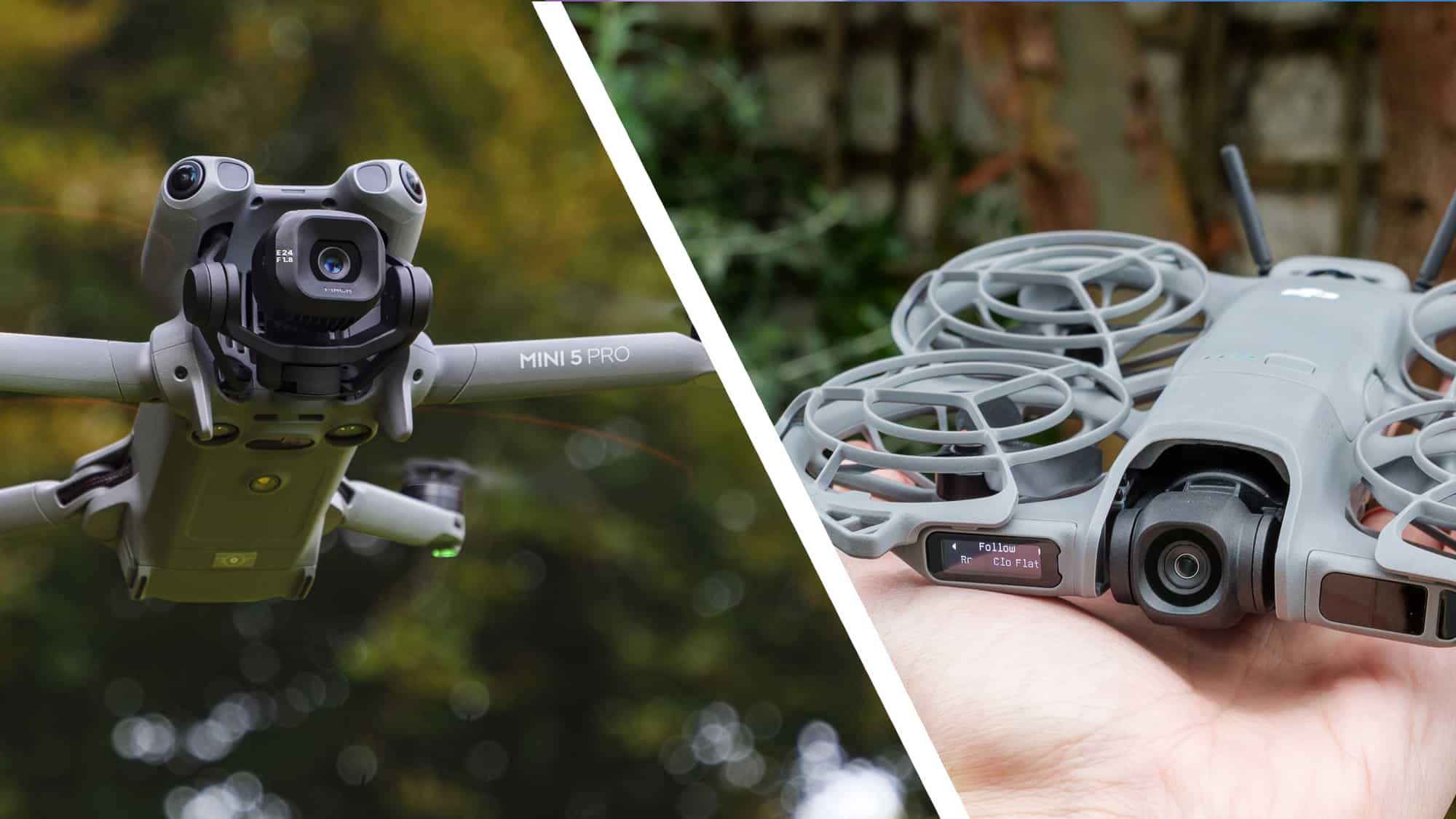
The FPV drone market offers dramatically divergent products serving fundamentally different user objectives: entry-level platforms prioritizing safety and affordability, mid-tier racing drones balancing performance with accessibility, and professional-grade systems built for competitive esports and content creation. By January 2026, the market has stratified sufficiently that optimal drone selection depends entirely on skill level, intended use case, and budget constraints. Understanding these categories enables informed purchasing decisions that prevent buyers from either outgrowing equipment prematurely or investing excessively in capabilities their skill level cannot yet utilize.
The Beginner Landscape: Safety, Accessibility, and Affordable Entry
Beginners entering FPV drone racing encounter three fundamentally distinct approaches, each serving different risk tolerances and budgets.
Ultra-Budget Entry ($100-180)
The EMAX Tinyhawk 4 RTF Kit represents the absolute lowest-cost entry point at $100-150. This micro whoop drone includes complete ready-to-fly equipment: pre-assembled airframe with brushed motors (upgraded for 2025), EMAX Transporter 2 analog FPV goggles, EMAX E8 transmitter, batteries, and charger. At these specifications, crashes generate minimal financial consequence—replacement propellers cost mere dollars, and entire spare drone backup units remain budget-feasible.
The Tinyhawk 4’s engineering emphasizes durability above performance: brushed motors sacrifice efficiency for ruggedness, ducted propellers prevent injury, and compact 2-3 inch frame size enables safe indoor flight even in crowded spaces. Flight time of 4-5 minutes per battery reflects the brushed motor power limitations, but multiple battery ownership (the RTF kit typically includes 2-3 batteries) enables continuous practice sessions.
However, significant limitations emerge once beginners demonstrate competency. Brushed motors exhibit visible performance degradation as carbon brushes wear—typically after 30-50 flight hours—necessitating replacements. The included analog FPV goggles and controller lack the upgrade path; pilots cannot transfer these peripherals to advanced equipment. Most critically, the Tinyhawk 4 cannot fly outdoors effectively; wind-sensitivity and limited power make outdoor operations impractical. Consequently, the Tinyhawk 4 targets pilots prioritizing indoor-only learning or those uncertain whether FPV flying aligns with their interests.
Balanced Beginner Option ($150-180)
The BetaFPV Cetus X Pro ($150-180) represents the preferred balance point for committed beginners. This micro whoop employs brushless motors running on 2S batteries, delivering substantially more power than Tinyhawk equivalents while maintaining safety-appropriate size. The kit includes FPV goggles, transmitter, batteries, and charger—offering complete systems without component sourcing.
Critical advantages of the Cetus X Pro include “Turtle Mode” enabling self-recovery from upside-down crashes (critical for beginners), multiple flight modes (stability assist options), and genuine indoor-outdoor capability. The brushless motor architecture means minimal maintenance and predictable performance degradation timeline. Most importantly, the controller and goggles architecture permits future upgrades; pilots can purchase advanced goggles while retaining the existing radio controller, creating genuine progression pathway rather than complete equipment replacement.
Flight time of 4-5 minutes per battery with 2S LiPo specifications suits deliberate training practice: each flight remains short enough for focused maneuver drilling rather than casual flying, encouraging intentional skill development. The Cetus X Pro’s sweet spot positioning—affordable enough to minimize financial risk from crashes, yet capable enough to handle modest wind and outdoor environments—explains its market dominance in beginner-focused reviews.
Premium Beginner Path ($250-1,200)
For beginners prioritizing absolute safety and long flight times over acceleration through a learning curve, two distinct premium paths emerge.
The DJI Neo ($250-350) represents the “no excuses” accessibility entry point. Pocket-sized and weighing under 250 grams, the Neo eliminates FAA registration requirements (recreational flying). The smartphone app control interface requires zero controller learning; palm takeoff/landing enables operation without any peripheral equipment. The 4K video camera captures quality content immediately, creating motivation for continued flying beyond pure skill progression. Flight time of 18-20 minutes exceeds simulator-to-real transition advice recommending 5-10 minute sessions, suggesting extended practice opportunities.
However, the DJI Neo sacrifices true FPV racing experience. Fixed camera orientation and altitude-hold assistance mean pilots never develop acrobatic maneuver capability or true “manual” flying skills necessary for competitive racing. Viewing the Neo as “drone flying introduction” rather than “FPV racing training” aligns expectations appropriately.
The DJI Avata 2 ($999-1,199 Fly More Combo) represents the premium beginner option for those willing to invest substantially in safety and production quality. The Avata 2 fundamentally differs from traditional FPV racing drones: it combines genuine first-person view immersion with autonomous safety features, obstacle avoidance, and return-to-home functionality. The 23-minute maximum flight time substantially exceeds 5-inch racing quads (which manage 3-5 minutes), enabling extended practice sessions without constant battery management.
Critically, the Avata 2 captures exceptional video quality. The 48MP sensor and 10-bit D-Log M color mode enable cinema-quality footage, transforming recreational flying into content creation opportunity. The Motion Controller option enables absolute beginners to control the drone using hand gestures rather than complex dual-stick inputs.
Nevertheless, the Avata 2 presents substantial compromises. At $1,199 (entry price), it exceeds typical first drone budgets by 10x. The 97 km/h maximum speed limitation means pilots operating it competitively face disadvantage against traditional 150+ km/h racing quads. Most significantly, the Avata 2 exists within DJI’s proprietary ecosystem—pilots cannot modify components, install different software (Betaflight), or integrate third-party equipment. For pilots eventually progressing to competitive racing, the Avata 2 teaches bad habits: the extensive autopilot assistance creates dependency on automation that disappears entirely in manual racing environments.
Intermediate Racing Drones: Performance-Oriented Progression
Intermediate pilots (typically 50+ simulator hours + 10+ real-world flights) seek higher performance while accepting elevated crash costs and complexity.
The iFlight Nazgul XL5 (~$250)
The iFlight Nazgul XL5 represents the sweet-spot intermediate platform. Priced at approximately $250, it delivers professional-grade performance without premium pricing. The carbon fiber frame with aluminum camera mount ensures durability through the inevitable crashes accompanying skill development. The ATF435 flight controller, BLITZ E55S 55A electronic speed controllers, and 2207 motors deliver responsive, high-acceleration performance suitable for racing line optimization.
Critically, the Nazgul XL5 arrives essentially “ready-to-go” with community-standard tuning. Pilots receive a drone flown consistently across thousands of examples, generating abundant online tutorials and community troubleshooting assistance. Component replacement remains straightforward—arm breakage (most common crash consequence) involves disconnecting two bolts and installing replacement arms (typically $20-30).
The primary limitation involves control difficulty. Without the Avata 2’s extensive automation and safety assists, pilots must develop precise throttle control and acrobatic maneuver execution independently. Crashes occur more frequently than Avata 2 operation, and repair costs accumulate. However, these challenges force skill development impossible within automated systems.
The Mobula 7 ELRS (~$200-250)
For tech-savvy intermediate pilots embracing customization, the Mobula 7 (2025 ELRS variant) offers exceptional value. This bind-and-fly platform requires separate purchases of FPV goggles and radio controller, but enables component selection aligned with individual preferences and existing equipment.
The ELRS receiver architecture represents significant advancement: the 2.4GHz frequency band operation eliminates interference vulnerability of traditional 5.8GHz systems, and community-driven firmware enables continuous performance improvements without manufacturer gating. Pilots can migrate the same ELRS radio controller across multiple drone platforms, reducing redundant hardware expenses.
However, BNF drones require binding procedures and basic troubleshooting knowledge foreign to absolute beginners. The learning curve is genuine, but manageable for pilots with simulator experience translating to equipment comprehension.
High-Performance Racing: GEPRC Racer and iFlight Evoque V2
For competitive-minded intermediate pilots, the GEPRC Racer ($250-350) and iFlight Nazgul Evoque V2 ($400-450) deliver professional-tier performance without professional pricing.
The GEPRC Racer employs aerospace-grade 7075-T6 aluminum alloy splint plates combined with T700 carbon fiber, generating lightweight yet rigid structures optimal for racing responsiveness. Motor options span GEPRC SPEEDX2 2207 2050KV and T-MOTOR F60PROV 2020KV professional racing motors, enabling output selection balancing acceleration versus efficiency. The TAKER F722 E55A flight controller stack delivers the processing performance necessary for real-time response to pilot input at high speeds. At 279-281 grams, the platform occupies a size-weight sweet spot between maximum agility and sufficient battery capacity for meaningful flight duration.
The iFlight Nazgul Evoque V2 similarly delivers premium components: carbon fiber frame optimized through competitive testing, professional-grade motor selection, and tuning reflecting Evoque series’ competitive racing heritage. Racing-focused pilots report the Evoque V2 as offering exceptional “feel”—the tactile feedback through transmitter inputs enabling micro-corrections impossible with less-refined platforms.
Professional and Competitive-Grade Systems
Professional pilots operate equipment categorized by specialized purpose: speed-focused racing, HD content capture, long-range exploration, or competitive esports standardization.
DJI Avata Pro-View Combo ($1,500-2,500)
For professional pilots prioritizing broadcast-quality video, the DJI Avata Pro-View Combo represents the pinnacle of integrated systems. The 48MP sensor captures stunning stills; the 10-bit D-Log M color mode enables cinematography-grade post-processing latitude; and the 23-minute flight time permits extended shooting without constant battery cycling.
The DJI O4 transmission system delivers 13-kilometer range at 60Mbps bitrate with 28-millisecond latency—specifications demanding for professional content requiring reliability across unpredictable environments. The Goggles 2 display delivers the immersive visual feedback critical for precise piloting, while onboard recording captures footage independent of FPV transmission compression artifacts.
However, the $2,500 entry cost concentrates this platform among professional productions and extremely affluent enthusiasts. The proprietary ecosystem limits customization beyond component replacement. Most critically, competitors flying custom-built racing quads will achieve substantially higher speeds (150-200+ km/h versus Avata’s 97 km/h maximum), creating inherent disadvantage in competitive racing scenarios.
Custom Professional Racing Builds ($400-800+)
Elite competitive pilots invariably fly custom-built platforms enabling equipment optimization beyond manufacturer limitations. Professional racing typically employs 5-inch quadcopter frames built from premium materials: carbon fiber construction with titanium reinforcement plates, 7075-T6 aluminum alloy components for critical stress points.
Motor selection reflects aggressive performance requirements. Professional racing motors span T-Motor, EMAX professional lines, and specialized racing motors optimized for explosive acceleration (2207 2050KV variants running 4S LiPo batteries generating theoretical maximum speeds of 35,000+ RPM). Electronic Speed Controllers rated 50-55 amperes handle peak current demands from high-KV motors.
Video transmission systems utilize bleeding-edge technology. The CADDXFPV Avatar GT demonstrates 15-kilometer transmission range with HD quality at 20-millisecond latency—specifications enabling professional long-range freestyle and speed competition. Walksnail HD systems similarly deliver competitive HD transmission at professional-tier reliability.
Critically, custom builds demand expertise. Pilots must understand motor-ESC-battery compatibility, Betaflight firmware configuration, and repair procedures. Component costs scale rapidly: single motor failures ($30-50 replacement) pale compared to propeller damage requiring 4x replacement at $15-20 each—crashes routinely cost $60-120. Professional pilots accept these expenses as training costs.
MultiGP Pro Spec Class
Organized competitive racing via MultiGP utilizes standardized “Pro Spec” equipment specifications enabling fair racing despite manufacturer diversity. The current Pro Spec class mandates:
- Specific frame (MultiGP Pro SPEC Frame or authorized alternatives)
- All-up weight limit: 1200 grams
- 6S 2200mAh maximum battery capacity
- Standardized propellers (typically 7x4x3)
- Betaflight KAACK firmware requirement
This standardization creates competitive parity: pilot skill determines outcomes rather than equipment investment. A $400 custom build Pro Spec drone fundamentally matches performance characteristics with $600 alternatives—only tuning precision differentiates them. This approach democratizes competitive racing, enabling skilled beginners to compete against well-funded veterans on genuinely level performance grounds.
Comparative Decision Matrix
| Pilot Profile | Ideal Platform | Price Range | Key Advantage | Primary Limitation |
|---|---|---|---|---|
| Uncertain Beginner | EMAX Tinyhawk 4 | $100-150 | Ultra-affordable, crash-proof | Indoor-only, quickly outgrown |
| Committed Beginner | BetaFPV Cetus X Pro | $150-180 | Balanced, expandable, indoor/outdoor | Limited speed, modest wind sensitivity |
| Non-Racing Learner | DJI Neo or DJI Avata 2 | $250-1,200 | Safe, intuitive, quality content | Not competitive-ready, restricted potential |
| Intermediate Racer | iFlight Nazgul XL5 | $250 | Professional performance, accessible price | Requires crash cost acceptance |
| Tech-Savvy Builder | Mobula 7 ELRS | $200-250 | Customizable, expandable ecosystem | Requires component sourcing |
| Competitive Aspirant | GEPRC Racer | $300-350 | Racing-optimized, professional-grade feel | Meaningful crash costs |
| Professional Pilot | Custom 5″ or MultiGP Pro Spec | $400-800 | Maximum performance, standardized competitive format | High expertise requirement, crash expenses |
| Content Producer | DJI Avata Pro | $1,500-2,500 | Broadcast-quality video, supreme safety | Slower than racing quads, very expensive |
The Critical Upgrade Decision
The most common beginner mistake involves premature equipment escalation. Research indicates that FPV racing learning curves exhibit logarithmic progression: initial skill improvements arrive rapidly with practice, but marginal returns diminish dramatically once fundamentals solidify. Pilots typically max 60-70% of their effective potential with entry-level equipment; the remaining improvement potential requires both superior hardware and refined technique.
Consequently, expert recommendation suggests: master your current platform to the point of frustration limitation before upgrading. A beginner achieving smooth 5-minute flights with a Tinyhawk 4 who then purchases a $500 racing quad will initially perform worse—unfamiliar equipment characteristics introduce new learning curves. Only after commanding entry equipment should pilots advance to faster, more demanding platforms where the performance ceiling no longer constrains skill expression.
Regulatory and Safety Considerations
Equipment selection must account for FAA regulations. Drones under 250 grams (sub-250g) avoid registration requirements—category encompassing the EMAX Tinyhawk 4, BetaFPV Cetus X, and DJI Neo. Drones 250g+ require FAA DroneZone registration ($5 one-time fee) but remain legal for recreational flying. Professional/esports participation requires Part 107 Remote Pilot Certification regardless of drone weight.
This regulatory framework explains why BetaFPV and EMAX market sub-250g options prominently: they eliminate paperwork friction for nervous beginners.
Final Recommendations by Commitment Level
Just Testing the Waters ($100-200): EMAX Tinyhawk 4 or DJI Neo. Minimal financial risk, decision clarity within 2-3 flights.
Serious Beginner Commitment ($150-250): BetaFPV Cetus X Pro. Best value-to-capability ratio; equipment remains relevant for 6+ months of active flying.
Simulator Veterans Ready for Reality ($250-400): iFlight Nazgul XL5 or GEPRC Racer. Jump directly to competitive-grade equipment with simulator foundation providing sufficient confidence.
Content Creation Focus ($1,000-1,500): DJI Avata 2 or DJI Avata Pro. Prioritize video quality and operational safety over pure racing performance.
Competitive Racing Ambition ($400-800): Custom 5″ or MultiGP Pro Spec class drone. Accept crash costs and expertise requirements as investment in competitive skill development.
By January 2026, the FPV drone market has matured sufficiently that optimal selections exist for every budget, skill level, and intended purpose. The critical element remains alignment between equipment capability and pilot aspiration—neither significantly constrained by the other.