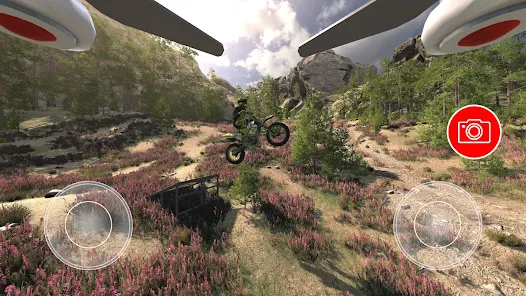
By January 2026, the drone simulator market has matured dramatically, with multiple platforms delivering physics accuracy within 94-99.9% of real-world flight characteristics. The competitive landscape spans PC (Steam, Epic Games), consoles (PlayStation, Xbox), and emerging VR platforms (Meta Quest 3), each offering distinct advantages for different pilot profiles and hardware configurations. Understanding these simulators’ strengths, limitations, and ideal use cases enables informed decisions aligned with individual skill levels, competitive aspirations, and hardware constraints.
The Physics Accuracy Hierarchy: VelociDrone Leads but Competition Narrows
VelociDrone ($22.65, PC only) stands universally recognized as the gold standard for physics authenticity. By competitive consensus across professional pilot communities, VelociDrone achieves the most accurate replication of real FPV drone behavior—not perfect (approximately 98-99% accuracy), but functionally transferable to physical aircraft.
The technical foundation explains this leadership. VelociDrone’s physics engine models subtle effects that dramatically impact competitive racing: Betaflight firmware peculiarities (PID controller idiosyncrasies, I-term reset behavior, D-term pure damping implementation), motor thrust saturation characteristics, and battery voltage sag under variable current loads. This meticulous firmware replication proves critical; pilots develop muscle memory matching their actual drone’s control behavior rather than idealized physics assumptions.
Critically, VelociDrone prioritizes input latency minimization. The graphics rendering remains deliberately simple (basic geometry, minimal post-processing effects), enabling low-latency input-to-visual feedback loops comparable to real DJI drone FPV latency (~28-30 milliseconds). This low-latency design philosophy explains professional pilots’ universal advocacy: skill development in VelociDrone transfers nearly identically to physical racing without relearning control timing.
However, VelociDrone sacrifices visual aesthetics to achieve this physics precision. The graphics appear dated relative to competitors; environments lack visual richness and atmospheric detail. Maps, while pixel-perfect recreations of actual MultiGP racing courses, remain relatively small compared to freestyle-focused alternatives. Consequently, VelociDrone targets racing specialists and serious competitive pilots rather than casual flyers seeking immersive cinematic experiences.
Liftoff ($19.99 PC, $29.99 console, free XR on Meta Quest 3) represents the accessibility champion, delivering balanced physics (94-97% accuracy) with substantially better beginner onboarding. Physics accuracy remains genuinely high—particularly throttle response and basic aerodynamic modeling—while maintaining easier controls and more forgiving flight dynamics than VelociDrone.
Liftoff’s deliberate physics design decisions reflect beginner prioritization. Slightly elevated drag coefficients and adjusted gravity parameters make Liftoff slightly more challenging than real flight, which paradoxically benefits beginners: developing precision control in Liftoff transfers effectively to easier real-world flying. The intuitive interface, structured tutorial progression, and optional difficulty adjustments create smooth learning curves absent in physics-focused competitors.
Liftoff’s ecosystem breadth proves strategically significant. Console availability (PlayStation, Xbox) enables casual gamers to access genuine FPV simulation without PC gaming hardware investment. The Liftoff XR experience on Meta Quest 3—completely free—democratizes VR drone flying through mixed-reality environments where users fly drones through their actual living rooms with realistic scale and physics.
Uncrashed ($14.99 PC) and TRYP FPV ($14.99 PC) occupy the cinematics-focused niche, prioritizing visual immersion over raw physics accuracy.
Uncrashed delivers mid-tier physics (approximately 90-95% accuracy) while maintaining smooth performance on modest hardware. The graphics quality remains substantially better than VelociDrone, with detailed environments and smooth frame rendering. Reviews consistently describe Uncrashed as “well-balanced”—solid physics without specialization, good visuals without extreme performance demands, and broad applicability across racing and freestyle flying.
TRYP FPV ($14.99 PC, released 2022) pursues ultimate visual fidelity at substantial performance cost. The graphics represent some of the finest in drone simulation, with massive maps featuring astonishing detail and varied environments enabling cinematic freestyle flying. However, this visual ambition demands high-end gaming PC hardware; performance issues and frame drops plague systems with modest GPU specifications. The physics, while decent, rank below VelociDrone and Liftoff—some users describe TRYP FPV’s flight dynamics as “floaty” or “slightly strange,” particularly regarding throttle management and acceleration curves.
TRYP FPV excels specifically for long-range freestyle and cinematic content creation, where raw physics accuracy matters less than expansive environments and visual aesthetic. For competitive racing or foundational skill development, Liftoff or VelociDrone prove superior despite TRYP’s superior graphics.
Platform-Specific Recommendations
PC/Steam Ecosystem (Desktop Gaming)
The PC platform offers maximum simulator variety and latest releases. For serious competitive pilots, VelociDrone remains mandatory—the physics accuracy and low-input latency create the most authentic training environment possible short of physical flying.
For balanced pilots wanting versatility, Uncrashed provides excellent middle ground: respectable physics, good graphics, stable performance across mid-range hardware, and strong freestyle capabilities.
For cinematics and long-range flying, TRYP FPV justifies its performance demands with unmatched visual environments—assuming high-end GPU availability.
Emerging options include FPVSIM (combining photorealistic graphics with research-level dynamics, available Steam/Epic Games, Windows/OSX/Linux), FPV Logic (newer simulator with physics similar to VelociDrone but freestyle-focused), and Firehawk FPV (action-oriented gameplay with solid stick-time training but lacking online multiplayer).
DRL Simulator ($10 value for content, or free through Game Pass) occupies a special position: the official Drone Racing League training simulator. Physics accuracy ranks highly (approximately 95%), with the strategic advantage that DRL SIM tryouts directly connect to professional contracts. The trade-off involves less customization and fewer freestyle options compared to dedicated simulators.
Console Gaming (PlayStation/Xbox)
Console options remain limited but improving. Liftoff: FPV Drone Racing represents the definitive console choice, available on PlayStation 4/5 and Xbox One/Series X|S. Console-optimized controls, intuitive interface design, and performance tuning for console hardware make Liftoff accessible to console gamers without PC gaming experience.
DRL Simulator recently achieved PlayStation/Xbox availability, offering console players the official esports simulation platform with online multiplayer connectivity.
Console hardware limitations constrain physics-intensive simulators. True competitive training requires VelociDrone’s raw processing efficiency—capabilities not fully translatable to console versions without substantial development overhead. Consequently, console simulators target casual to intermediate pilots rather than esports competitors requiring cutting-edge performance.
VR/Mixed Reality (Meta Quest 3)
Liftoff XR Drone (completely free on Meta Quest 3) represents the VR revolution in drone simulation. Rather than traditional cockpit perspectives, Liftoff XR enables mixed-reality flying: drones scale realistically to actual home environments, cast realistic shadows, and interact with physical furnishings through spatial mapping.
The experience proves genuinely innovative. Users can fly drones through their living rooms, around furniture, avoiding real-world obstacles through VR-space mapping. The physics remain solid (approximately 94-97% accuracy), and the immersive perspective accelerates spatial orientation development impossible in traditional monitor-based simulation.
However, Liftoff XR remains deliberately casual rather than hardcore. The mixed-reality focus deprioritizes competitive racing features; hand-controller inputs replace traditional radio controller precision. Future iterations might add radio controller support, but current implementation prioritizes accessibility over esports competitiveness.
Specialized Platforms
Real Drone Simulator (RDS) embraces a unique differentiation strategy: 3D-scanned real-world environments combined with advanced physics modeling based on actual drone component specifications. Rather than stylized fantasy maps, RDS recreates literal real-world locations with scan-based accuracy. This approach particularly appeals to professionals requiring practice in specific real-world environments without travel costs.
The physics engine pre-calculates flight characteristics for custom-built drones, enabling realistic behavior matching actual component combinations. However, RDS remains more specialized and less accessible than mainstream competitors—targeting professional operators rather than competitive gamers.
Comparative Physics Accuracy Table
| Simulator | Physics Accuracy | Graphics Quality | Performance Demands | Best For | Price |
|---|---|---|---|---|---|
| VelociDrone | 98-99% (Best) | Basic/Functional | Low (optimized) | Competitive racing, pro training | $22.65 |
| Liftoff | 94-97% | Good | Moderate | Balanced progression, console play | $19.99-29.99 |
| Uncrashed | 90-95% | Very Good | Moderate-High | Balanced racing + freestyle | $14.99 |
| TRYP FPV | 88-92% | Excellent | High (demanding) | Cinematic freestyle, long-range | $14.99 |
| DRL Simulator | 95-97% | Good | Moderate | Esports training, official league | $10 |
| FPV Logic | 95-98% | Good | Moderate | Freestyle-focused racing | Variable |
| Real Drone Simulator | 90-95% | Good (3D-scanned) | Moderate | Professional real-world training | Free |
| Liftoff XR | 94-97% | Very Good (VR) | Low (Quest 3 native) | VR learning, mixed reality | Free |
Skill Transfer to Real-World Flying
Research confirms that simulator skills transfer nearly identically to physical flying when physics accuracy exceeds 94%. VelociDrone’s 98-99% accuracy enables practically perfect transfer; pilots demonstrate comparable gate-hitting precision and racing line execution within 1-3 real flights.
Liftoff’s 94-97% accuracy also demonstrates strong transfer, though pilots report slight throttle response adjustments needed during first real flights. The slightly elevated drag and gravity parameters, while less authentic, paradoxically benefit pilot confidence: flying feels “easier” after Liftoff’s intentional challenge elevation.
Simulators below 90% accuracy (TRYP FPV, some emerging titles) produce weaker transfer; pilots report more substantial adjustment periods when transitioning to physical flight, requiring 5+ real flights to adapt to actual physics.
2026 Emerging Innovations
FPV Labs (planned Q1 2026 Steam release) promises “a new standard in FPV simulation” with handcrafted maps, build/tune customization, and undisclosed physics innovations. Early previews suggest potentially challenging VelociDrone’s physics accuracy crown while offering superior visual presentation.
AI-Enhanced Physics integration continues advancing; simulators increasingly employ machine learning to predict individual pilot tuning preferences and adjust physics parameters accordingly, enabling unprecedented customization.
Practical Selection Framework
For Absolute Beginners ($0-30): Start with Liftoff (console or PC, $19.99), or free Liftoff XR on Meta Quest 3. Gentle physics, excellent tutorials, minimal intimidation.
For Simulator-to-Real Transition ($20-25): VelociDrone remains mandatory. Accept simpler graphics as trade-off for physics authenticity ensuring real-world transfer.
For Balanced Progression ($15-20): Uncrashed offers sweet spot—solid physics, good graphics, stable performance across hardware configurations.
For Cinematic/Freestyle Focus ($15-20 + high-end PC): TRYP FPV justifies performance demands with unmatched visual environments.
For Esports/Competitive ($10): DRL Simulator combines respectable physics with direct pathway to professional opportunities through official tryouts.
For VR Enthusiasts (Free): Liftoff XR on Meta Quest 3 revolutionizes learning through spatial awareness and realistic scale—casual but genuinely effective.
For Professional Training: Real Drone Simulator with 3D-scanned real-world environments provides unmatched specificity for location-based practice.
By January 2026, the drone simulator ecosystem has achieved remarkable maturity: physics accuracy now exceeds 94%+ across mainstream platforms, ensuring genuine skill transfer to real flying. The differentiation has shifted from technical feasibility to philosophical specialization—racing precision versus cinematic immersion versus accessibility versus esports integration. No single “best” simulator exists; the optimal choice depends on individual priorities, hardware constraints, and competitive ambitions.