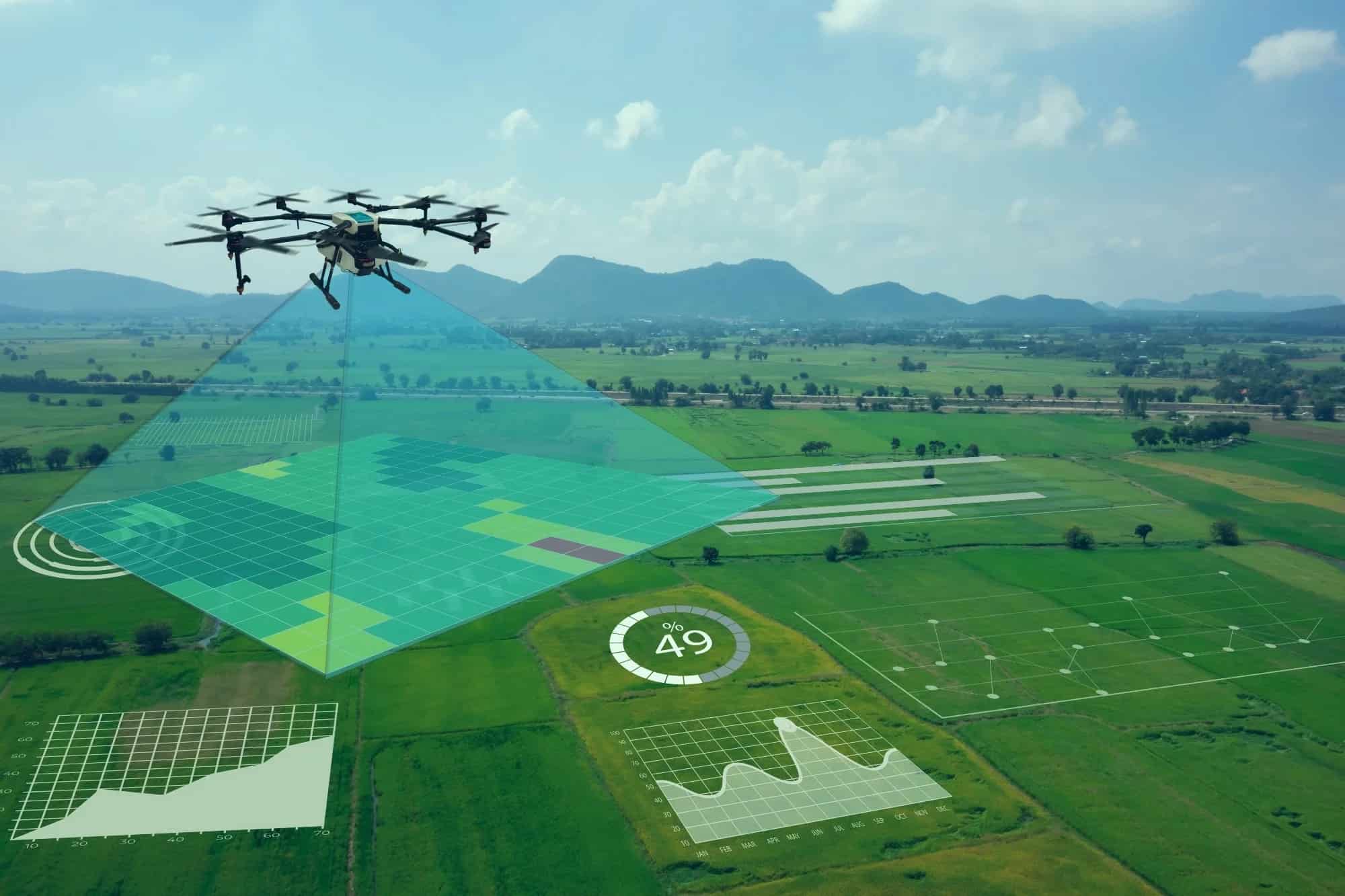
Artificial intelligence has fundamentally transformed drone gaming and autonomous flight, progressing from theoretical research curiosities to practical systems that outperform world champion human pilots while simultaneously enhancing player experiences in competitive gaming environments. By January 2026, AI integration spans three critical dimensions: autonomous racing systems achieving champion-level performance, physics-based gameplay mechanics reaching near-perfect realism, and adaptive gaming systems personalizing challenge levels to individual player capabilities. The convergence of these elements has elevated drone gaming from entertainment category into serious athletic competition while simultaneously making the category more accessible to players of all skill levels.
The Autonomous Racing Revolution: AI Beating Human Champions
Perhaps the most dramatic validation of AI’s drone gaming impact emerged in 2025 when the MonoRace autonomous system defeated three world champion FPV pilots in direct head-to-head competition at the Abu Dhabi Autonomous Racing League (A2RL) championship. This achievement transcends sporting spectacle; it represents a fundamental inflection point where artificial intelligence achieved parity with human mastery in a domain demanding real-time decision-making, extreme precision, and split-second tactical judgment.
MonoRace’s technical specifications underscore the efficiency of modern AI-driven flight mechanics. The system operates using only a monocular (single-camera) RGB sensor and an IMU (inertial measurement unit)—deliberately constrained to specifications matching practical real-world constraints. Despite these limitations, the neural network controlling the drone contains merely 3×64 neurons running directly on a 32-bit flight controller at 500 Hz cycle rate. This extraordinarily compact neural architecture produces control outputs processed with 8-millisecond latency—enabling high-speed autonomous flight at 28.23 m/s (100+ km/h) while maintaining gate-navigation accuracy impossible for manual controllers operating under equivalent constraints.
The achievement becomes more remarkable when considering training methodology. Rather than requiring millions of real-world flight hours, MonoRace required only approximately 50 seconds of real-world flight data for fine-tuning, applied after extensive simulation training using domain randomization techniques. This sim-to-real transfer represents a critical advance in applied AI: the gap between simulator performance and physical-world capability has compressed from massive to negligible through intelligent training methodologies.
The 2022 AlphaPilot achievement, where Swift similarly beat human world champions, preceded MonoRace by three years but established the foundational proof-of-concept. These sequential victories demonstrate that AI superiority in drone racing wasn’t anomalous but rather reflects genuine technical advancement—each generation of systems outperforming predecessors while operating under stricter computational constraints.
Physics-Based Flight Mechanics: Near-Perfect Simulator Fidelity
Underlying autonomous racing success lies extraordinary advancement in flight physics modeling. Modern AI-enhanced simulators model drone aerodynamics with 94-99.9% accuracy to real-world behavior, including subtle effects that dramatically impact competitive performance.
The technical sophistication extends beyond simple lift-drag calculations. Advanced simulators now model altitude-dependent air density effects (reducing wing lift by approximately 12% at 100-meter altitude), rotor vortex dynamics that predict component stress under various loads, and battery voltage sag under variable current draw—a subtle but consequential effect where battery output voltage drops progressively as flight duration extends. These micro-physical effects cumulate into macro-competitive impact; pilots trained in accurate physics simulators transition to real racing demonstrating dramatically fewer crashes and faster learning curves compared to those trained on simplified physics engines.
A critical breakthrough involved replicating Betaflight firmware peculiarities—the open-source flight controller software running on physical drones. Rather than assuming “ideal” PID (proportional-integral-derivative) control behavior, AI-enhanced simulators now capture Betaflight’s actual characteristics: the reference signal for the derivative term remains constantly zero (implementing “pure damping”), the integral term resets when throttle cuts, and motor thrust saturation triggers prioritization of body rate control over motor signal saturation prevention. This seemingly obscure technical detail proves functionally critical: pilots must develop muscle memory matching their actual drone’s control behavior, not theoretical behavior of an “ideal” controller.
The simulation-to-reality fidelity has reached extraordinary precision. Advanced simulators predict individual motor commands output by the flight controller with less than 1% error compared to actual physical systems. This accuracy enables pilots to develop genuinely transferable skills: a racer who masters racing lines and throttle control in simulation will execute those same techniques nearly identically when piloting physical drones.
Deep Reinforcement Learning for Autonomous Control
The technical foundation underlying AI drone racing involves deep reinforcement learning—a machine learning paradigm where neural networks learn optimal control policies through trial-and-error simulation training rather than explicit programming.
The training architecture employs proximal policy optimization (PPO), an actor-critic approach requiring simultaneous optimization of two neural networks: a policy network mapping observations to actions (thrust and body rates), and a value network evaluating action quality. Rather than pre-programming “if altitude is low, increase throttle,” the system learns through thousands of simulated racing attempts what actions produce optimal outcomes.
The reward function sophistication proves critical for training quality. Rather than merely rewarding speed, comprehensive reward functions weight multiple objectives: progress toward the next gate, perception awareness (ensuring camera optical axis points toward gate center), smooth control actions (penalizing jerky inputs), and binary crash penalties. This multi-objective optimization creates policies that balance aggressive speed with controlled precision—human pilot behavior replicated through mathematical reward engineering.
Domain randomization—introducing controlled variation into simulation training—proved decisive for crossing the “sim-to-real gap” that plagued earlier autonomous systems. Rather than training on identical simulated conditions, systems trained across randomized physics parameters (battery voltage variations, motor speed response differences, drag coefficient uncertainty) demonstrated remarkable robustness when deployed on physical systems. This counterintuitive approach—making training less realistic to improve real-world performance—represents a critical AI insight: system robustness benefits from exposure to controlled variability during training.
Gameplay Enhancement Through Adaptive AI Systems
Beyond competitive racing, AI has revolutionized casual and semi-competitive drone gaming through dynamic difficulty adjustment—systems that continuously monitor player performance and adjust challenge levels to maintain engagement without inducing frustration.
These adaptive systems analyze multiple player performance metrics: task completion time (longer durations suggesting difficulty), keystroke efficiency (high-performance players require 30% fewer control commands), accuracy metrics, and win/loss ratios in competitive scenarios. Rather than static difficulty levels (Easy/Normal/Hard), AI systems continuously adjust challenge parameters in real-time based on detected skill progression.
The implementation proves sophisticated. If a player demonstrates exceptional performance during a particular drill (smoothly navigating gates at consistent high speed), the system incrementally introduces new variables: dynamic obstacles, unpredictable environmental conditions, or tighter timing constraints. Conversely, if players struggle with specific maneuvers, the system can reduce environmental complexity while highlighting the skill needing development—adjusting game parameters to isolate problematic techniques.
Research quantifies the effectiveness of these adaptive systems. Players training in gamified drone environments demonstrate 15-25% reduction in task completion time through repeated practice, with keystroke requirements decreasing proportionally as motor control efficiency improves. More significantly, adaptive systems reduce participant stress levels while maintaining engagement—a critical balance where challenge remains sufficient to prevent boredom while remaining surmountable to prevent frustration.
AI-Powered Flight Path Optimization
Contemporary drone applications employ machine learning to optimize flight paths in real-time, considering weather patterns, air traffic density, no-fly zone restrictions, and mission-specific objectives. This application extends beyond gaming into logistics, inspection, and emergency response—domains where drone operation directly impacts operational efficiency.
These systems utilize reinforcement learning, genetic algorithms, and neural networks simultaneously. Reinforcement learning handles dynamic obstacle avoidance by rewarding collision prevention and successful route completion. Genetic algorithms—mimicking natural evolution principles—identify globally optimal solutions within complex environmental constraints. Neural networks recognize environmental patterns and predict future conditions from historical data.
The practical impact proves substantial. AI-optimized flight paths reduce energy consumption by 15-30%, decrease flight time by 10-20%, and improve safety by proactively avoiding hazardous conditions. Real-time integration with weather services and air traffic management systems enables continuous path recalculation, ensuring drones remain responsive to environmental changes during flight.
Iterative learning model predictive control (LMPC) enables continuous performance improvement by analyzing past flight trajectories and optimizing future paths accordingly. Results demonstrate remarkable improvement potential: lap times improve by up to 60.85% when applied to suboptimal baseline controllers, and even applied to already-tuned professional-grade controllers (MPCC++), 6.05% improvement persists. This cascading improvement suggests that AI-driven optimization never reaches ceiling—perpetual incremental enhancements remain possible through continued algorithm refinement.
Physics-Informed Machine Learning: Hybrid Approaches
Emerging research combines deep learning’s pattern recognition capabilities with aerospace physics conservation laws through control-physics informed machine learning (CPhy-ML)—hybrid systems reducing inherent ML bias through physics-based constraints.
This approach proves particularly valuable for drone intention prediction (determining what action a drone will execute based on partial observations). Traditional machine learning methods achieve approximately 46-50% accuracy; CPhy-ML incorporating physics constraints achieves 48.28% performance improvement over conventional approaches. In drone defense and safety applications, this marginal accuracy improvement translates into dramatically increased threat detection reliability.
The approach integrates seamlessly with existing frameworks. Reservoir computing methods—recurrent neural networks with fixed random weight projections—combined with physics-informed feedback loops enable noise suppression and trajectory prediction across extended time horizons (30-second windows and beyond). These hybrid systems demonstrate stability across noisy real-world sensor data where pure learning-based approaches diverge.
Autonomous Racing as Technology Testbed
The A2RL drone championship (Abu Dhabi Autonomous Racing League), returning for Season 2 at UMEX 2026, functions simultaneously as competitive sport and applied research testbed. This dual purpose accelerates technological advancement; competitive pressure incentivizes rapid innovation, while transparent results enable rapid technology transfer to real-world applications.
The 2026 season format reflects maturing AI autonomy. The AI Speed Challenge tests individual system performance through time trials requiring precision gate navigation at maximum speed. The AI vs AI Multi-Drone Race introduces collision avoidance requirements—three autonomous systems operating simultaneously must navigate identical courses while avoiding collisions with competitors, introducing multi-agent coordination complexity. The Human vs AI Challenge provides direct performance comparison between elite human pilots and autonomous systems operating under identical constraints, generating benchmark data for progress measurement.
Season 2 technical upgrades underscore continuous refinement. Enhanced drone platforms, more technically demanding racecourses, and a new “Ladder obstacle” introducing vertical complexity testing depth perception capabilities reflect lessons learned from Season 1 competitions. This iterative improvement cycle—competing, analyzing results, identifying improvement opportunities, implementing enhancements—mirrors biological evolution compressed into accelerated timescales.
Accessibility and Democratization Through AI
Perhaps paradoxically, as AI systems achieve superhuman racing performance, AI-driven gaming features simultaneously democratize drone racing accessibility. Adaptive difficulty systems, personalized training platforms, and AI-powered coaching reduce traditional gatekeeping where established pilots maintained competitive advantage through experience.
AI-driven adaptive training platforms automatically identify specific performance weaknesses. Rather than requiring human coaches to observe training sessions, AI systems analyze keystroke patterns, completion times, and maneuver execution to pinpoint specific skills requiring development. These systems then customize training scenarios, replaying challenging maneuvers at reduced complexity levels while gradually increasing difficulty as competency improves.
The psychological impact proves significant. Players demonstrate reduced stress during training while maintaining engagement—a critical balance difficult to achieve through manual difficulty tuning. Gamified drone training environments show measurable improvements in reaction speed, hand-eye coordination, and task completion efficiency, with quantifiable benefits appearing within 3-5 training sessions.
Multi-Agent Coordination and Swarm Behavior
Advanced AI research enables coordination of multiple autonomous drones operating simultaneously without centralized control—a capability with profound implications for drone racing and broader autonomous systems. Adaptive teaming mechanisms enable drones to adjust strategies based on competitor behavior, environmental conditions, and real-time performance feedback.
This area remains nascent but advancing rapidly. Current competitions include multi-drone races where three autonomous systems compete simultaneously, requiring collision avoidance algorithms sophisticated enough to handle dynamic opponent positions. Future iterations will likely introduce team-based formats where multiple drones coordinate to achieve shared objectives, requiring consensus algorithms and distributed decision-making.
Computational Efficiency and Embedded Systems
A critical achievement involves deploying sophisticated AI on embedded systems with severe computational constraints. MonoRace’s 3×64 neuron network running at 500 Hz on a 32-bit microcontroller demonstrates that extraordinary aerial performance doesn’t require massive computational resources—only well-designed algorithms.
This efficiency has profound implications. Smaller, cheaper drones can implement advanced autonomy features previously restricted to expensive systems with dedicated onboard computers. This democratization extends beyond racing into commercial applications: delivery drones, inspection platforms, and emergency response systems gain access to cutting-edge AI capabilities through improved algorithmic efficiency rather than hardware scaling.
Future Trajectory: 2026-2030 Outlook
The convergence of autonomous racing achievements, physics-based gameplay improvements, and AI-driven personalization suggests that drone gaming will continue accelerating in sophistication.
By 2030, expect fully autonomous racing championships with prize pools rivaling professional motorsports ($10-50 million annually), driven by broadcast demand from 1+ billion Gen Z viewers for technology-native sports. AI coaching systems will enable beginners to achieve intermediate skill levels within weeks rather than months, fundamentally democratizing competitive access.
Physics simulation fidelity will approach indistinguishability from real-world flight, enabling meaningful training entirely in virtual environments. Hybrid physics-learning models will enable drones to operate effectively in previously impossible conditions (extreme weather, GPS-denied environments, swarm coordination scenarios).
The ultimate achievement—AI systems significantly outperforming human pilots across all competition formats—will likely emerge by 2027-2028, solidifying autonomous racing as the first competitive domain where machines achieve undisputed supremacy. Paradoxically, this achievement will likely accelerate human participation rather than diminishing it, as audiences become fascinated by “how does the AI do that?” and attempt to replicate autonomous performance characteristics through training—driving recreational participation upward.
Artificial intelligence has fundamentally elevated drone gaming across three dimensions: technical excellence (autonomous systems achieving superhuman competitive performance), player experience quality (adaptive systems personalizing challenge levels), and accessibility (democratizing skills previously requiring months of deliberate practice). By January 2026, AI integration has matured from experimental research curiosity into operational infrastructure driving mainstream drone gaming adoption. The trajectory suggests that by 2030, AI-enhanced drone gaming will rival traditional esports in viewership, professional compensation, and cultural significance—validating the original vision that AI could unlock entirely new competitive categories impossible within previous technological constraints.