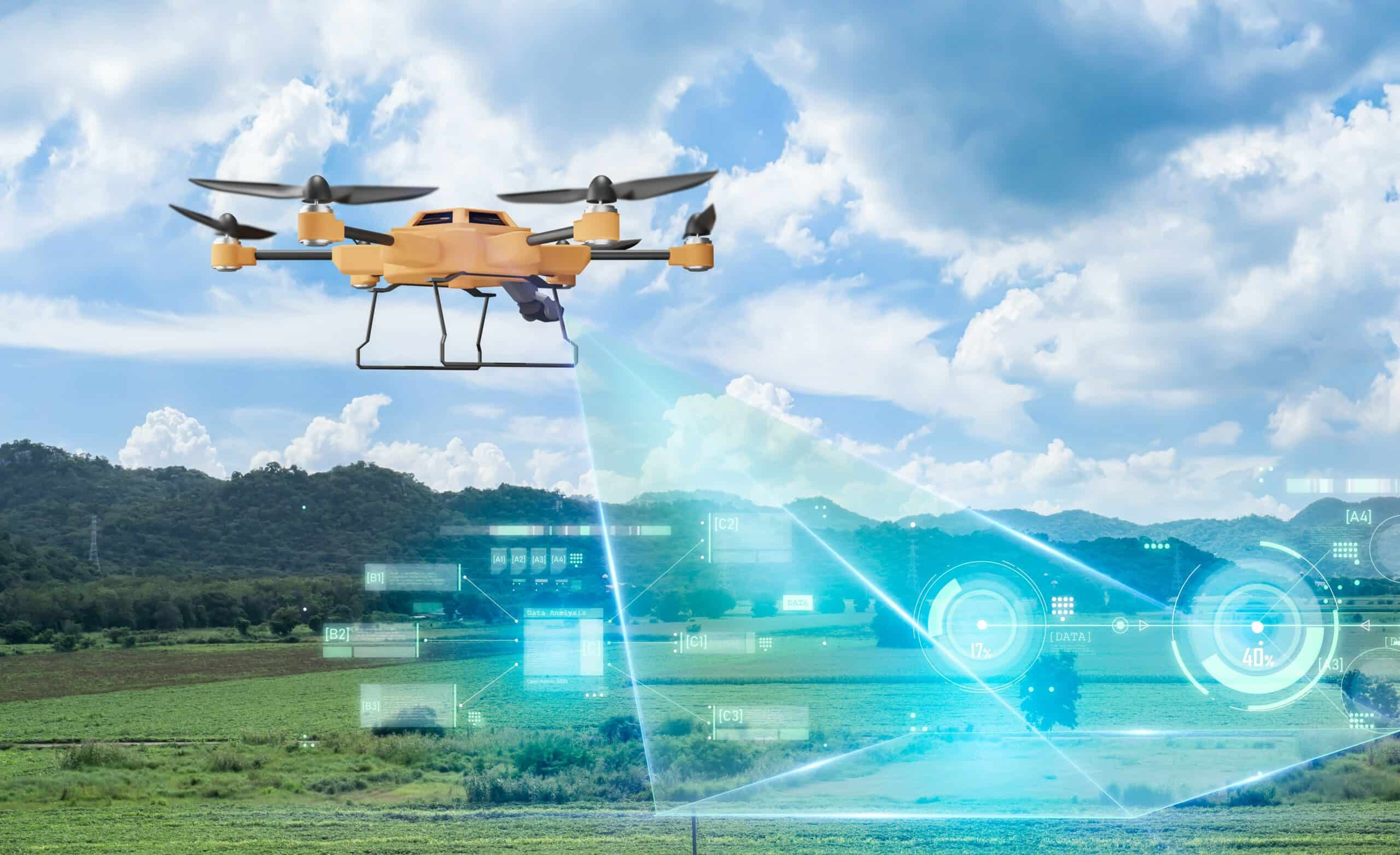
Drone technology has evolved from a niche hobbyist tool into a transformative force reshaping nearly every dimension of the gaming industry—from how games are developed and played to how sports are broadcast and monetized. By 2026, the racing drone market alone is projected to reach $2.02 billion, up from $1.72 billion in 2025, with a compound annual growth rate of 17.4% through 2030, fundamentally redefining what interactive entertainment means. This convergence reflects a profound shift: drones are no longer peripheral to gaming but central to its technological and commercial infrastructure.
Game Development and Asset Creation
The most immediate impact of drone technology on gaming lies in production efficiency and realism. Video game developers have adopted drone-captured imagery combined with photogrammetry—a technique that converts overlapping photos into precise 3D models—to revolutionize environment creation. Rather than manually constructing virtual environments pixel-by-pixel, developers now deploy drones equipped with high-definition cameras to capture real-world locations from multiple angles, then use specialized software to automatically generate production-ready 3D assets.
This approach has dramatically compressed production timelines. Where traditional 3D modeling of complex environments once consumed thousands of designer hours, drone photogrammetry now accomplishes comparable work in days or weeks. Major franchises have embraced this methodology: Turn 10 Studios uses drone-captured LiDAR data to recreate iconic racing tracks in Forza Motorsport with meticulous accuracy, including trackside vegetation and terrain. Call of Duty leverages drone imagery to render real cities, while farming simulators capture agricultural landscapes with drone-based precision to deliver authentic virtual environments.
The economic implications are substantial. By automating environment asset creation, developers redirect creative resources toward gameplay mechanics, narrative design, and visual polish rather than tedious manual modeling. A pioneering example emerged with The Vanishing of Ethan Carter (2014), where photogrammetry reduced production time by years, allowing the studio to focus on immersive storytelling within photorealistic Polish mountains. Today, platforms like DroneDeploy and Pix4D standardize this workflow, offering game studios survey-grade 3D reconstruction that would have been prohibitively expensive just five years prior.
Drone Racing: From Niche Sport to Global Esports Phenomenon
The emergence of professional drone racing represents a watershed moment in gaming’s evolution—the emergence of a sport that seamlessly blends physical athleticism with digital expertise. The Drone Racing League (DRL), acquired in April 2024 by Infinite Reality for $250 million, exemplifies this convergence. DRL reaches approximately 100 million fans globally and broadcasts on NBC, YouTube, TikTok (5 million followers), Twitch, and Twitter to 320 million households across 170 markets.
What distinguishes drone racing from traditional esports is its omnichannel architecture. The sport operates simultaneously across physical venues, digital simulations, and metaverse environments. Elite pilots compete in real-world races inside LED-covered arenas and iconic sports venues at speeds exceeding 90 mph, while millions participate in identical competitions through the DRL SIM game available on PlayStation, Xbox, Steam, and Epic Games. Winners of DRL SIM esports tournaments receive invitations to professional leagues—creating a talent pipeline where exceptional simulator players can transition to six-figure professional careers piloting actual drones.
The racing drone market itself demonstrates explosive growth, expanding at a 20.9% compound annual growth rate with projections reaching $3.83 billion by 2030. This economic expansion reflects both equipment sales (frames, motors, batteries) and the emergence of professional leagues, training academies, and customization services.
Broadcasting and Cinematic Content Creation
Drone technology has fundamentally altered sports broadcasting aesthetics. Major networks—Fox, ESPN, CBS—now routinely deploy drones to capture dynamic shots impossible with traditional helicopters or blimps. Fox Sports executive Michael Davies articulated the strategic imperative: making live sports coverage “look like a video game” by capturing tight, high-speed angles from angles previously inaccessible.
Drones excel where legacy aircraft fail: they navigate congested spaces, produce cinematic lateral tracking shots within stadium complexes, and access low-altitude perspectives that create visceral intimacy with competition. This capability has become essential for attracting younger audiences accustomed to video game cinematography standards. The Deloitte survey finding that 54% of Gen Z and Millennials expect professional sports to be more immersive by 2030 reflects demand for precisely these drone-enabled visual experiences.
However, regulatory constraints remain significant. A 2024 incident where a drone crashed into a crowd at a Boston Celtics watch party underscored safety concerns, particularly in densely populated venues. Despite these challenges, industry momentum continues: the UFL (partially owned by Fox) has pushed boundaries by flying drones within the field of play, providing previously impossible camera angles.
Convergence of Physical, Virtual, and Metaverse Gaming
Perhaps the most transformative development involves drone technology’s integration across multiple reality layers. DRL operates a sophisticated ecosystem where fans can:
- Compete in simulation tournaments via DRL SIM (PlayStation, Xbox, Steam, Epic Games), the official esports simulator featuring real DRL pilots and tracks
- Win competitive prizes through DRL Arcade, a Skillz-powered mobile game
- Earn cryptocurrency and NFTs by playing P2E games on the Algorand blockchain, where in-game assets possess real economic value
- Experience the metaverse through Project Drone Galaxy, where players build custom drones and compete as animal avatars
This multi-layered architecture reflects the Infinite Reality acquisition’s strategic vision: creating AI-powered sports entertainment spanning professional stadiums, global circuits modeled on Formula One architecture, and immersive digital experiences. The progression pathway—casual fan → simulator competitor → professional pilot → metaverse participant → crypto-enabled investor—constructs a complete economic ecosystem around drone racing.
DRL’s $100 million five-year partnership with Algorand (announced 2021) crystallizes the blockchain-gaming integration. Fans and pilots can now hold NFT collectibles with provable ownership, participate in play-to-earn competition, and monetize engagement directly. This represents a fundamental departure from traditional sports models where viewing or participation generates no direct financial return for consumers.
VR and Immersive Reality Integration
Virtual reality represents perhaps the most viscerally immersive application of drone technology in gaming. FPV (First-Person View) drone racing, when combined with VR headsets, creates an unparalleled sense of embodied flight. Pilots don VR goggles synced to real-time drone camera feeds, experiencing high-speed navigation through obstacle courses as if they personally occupied the aircraft. This hybrid physical-digital immersion surpasses traditional gaming precisely because real physics govern drone motion—no artificial smoothing or assistance obscures the reality of aerodynamic limits and pilot error.
Liftoff: FPV Drone Racing on Meta Quest 3 democratizes this experience, enabling millions to access pro-level VR drone racing without owning expensive hardware.[from previous report] The technical accomplishment reflects advances in latency reduction and headset processing power that render real-time synchronization between drone sensors and VR rendering practically imperceptible to users.
Market Structure and Commercial Implications
The convergence of drone technology and gaming has created entirely new business categories. By 2026, the global drone market is projected at $69 billion, advancing to $147.8 billion by 2036 at a 7.9% CAGR. Commercial drone shipments are expected to grow 2.3x between 2025-2036, while sensor shipments grow 4x, indicating increasing sophistication and payload capacity.
Within this ecosystem, gaming represents a high-margin, culturally influential segment. DRL’s $250 million valuation reflects not just current revenue but anticipated future dominance in sports entertainment. The acquisition by Infinite Reality—which consolidates DRL with esports organization Rogue, talent management, and broadcast technology—signals consolidation around integrated gaming-entertainment platforms.
Corporate partnerships validate commercial viability: T-Mobile’s 5G partnership with DRL, Google Cloud’s infrastructure commitment, and sponsorships from the U.S. Air Force demonstrate that Fortune 500 companies now view drone racing as essential brand engagement with Gen Z.
Future Trajectory and Emerging Challenges
Looking forward, five critical developments will shape drone gaming’s evolution:
AI-Powered Autonomy: By 2026, machine learning will enable drones to operate with minimal human intervention, performing complex tasks like autonomous racing with enhanced decision-making. AI-driven training tools will optimize pilot performance prediction and competitive analysis.
Swarm Coordination: Multi-drone synchronization will enable cooperative gameplay mechanics impossible with single-unit control, opening new competitive formats.
Sensor Proliferation: Industrial drones will incorporate 10-15 sensors by 2036, enabling richer environmental feedback and more sophisticated in-game data collection.
Regulatory Maturation: FAA rulings on Beyond Visual Line of Sight (BVLOS) operations will enable new drone racing formats and broadcast capabilities. Remote ID standards will facilitate organized competition at scale.
Web3 Sustainability: The question of whether blockchain-integrated gaming creates sustainable engagement (as opposed to speculative asset trading) remains unresolved. DRL’s early success suggests gaming-first design with crypto integration as reward mechanism rather than primary mechanic succeeds better than crypto-first platforms.
Drone technology has intersected with gaming at precisely the moment when younger audiences demand immersion, interactivity, and authentic engagement. From photogrammetry accelerating game development to drone racing creating genuine sports with esports pathways, from broadcast innovation to metaverse integration, drones are no longer just entertainment tools—they’re foundational infrastructure reshaping how games are made, played, watched, and monetized. By 2030, when professional drone racing stadiums and Formula One-inspired global circuits materialize, drone gaming will have evolved from novelty into mainstream sports entertainment rivaling traditional athletic properties in viewership and investment.