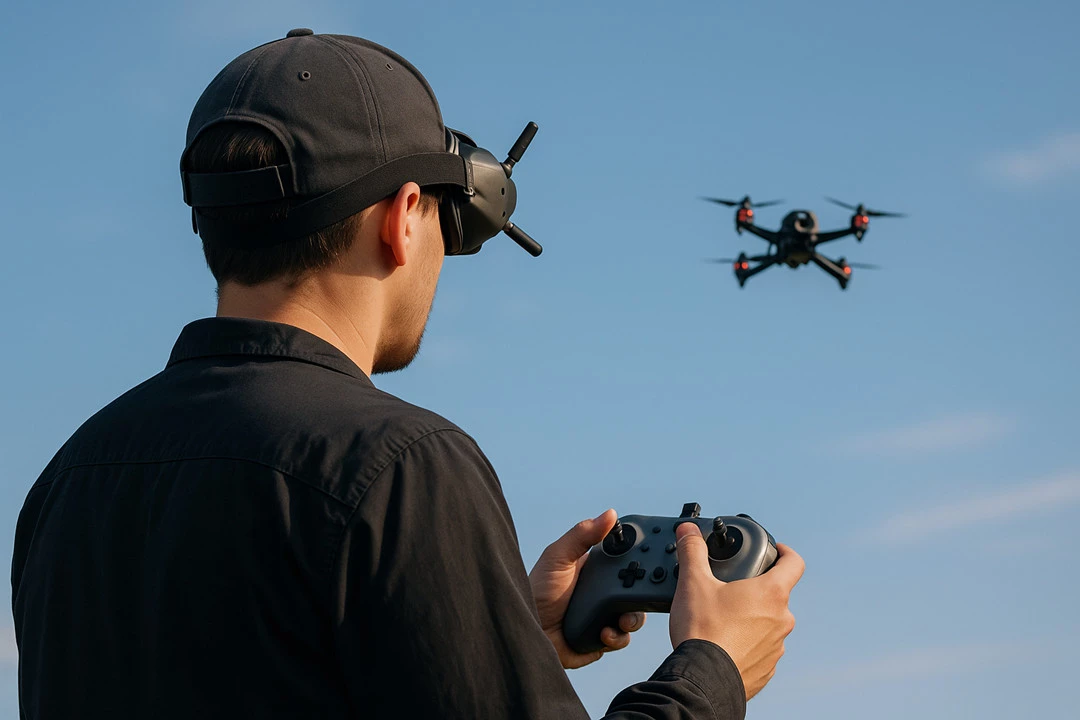
FPV (First-Person View) drone racing has undergone a dramatic metamorphosis from niche hobbyist activity into a globally recognized competitive esport with professional salaries, institutional investment, and mainstream media distribution. By January 2026, the racing drone market is experiencing explosive growth—expanding from $1.72 billion in 2025 to $2.02 billion in 2026 at a 17.4% compound annual growth rate, with projections reaching $3.83 billion by 2030. This acceleration reflects a fundamental shift: FPV drone racing is no longer competing for attention within niche communities, but directly rivaling traditional esports and emerging as one of the fastest-growing spectator sports globally.
The Explosive Growth of a New Sport
The Drone Racing League (DRL), founded in 2015, stands as the vanguard of this transformation. During its 2022-23 championship season, DRL achieved unprecedented audience metrics: 260 million global digital views (23% increase year-over-year), reaching 320 million households across 170 markets (30% growth from previous season), and accumulating 12 million social media followers (45% increase). Daily social media engagement averaged 3 million video views, indicating consumption patterns typical of mainstream esports rather than niche activities.
These metrics accelerated dramatically in 2024-2025. Recent announcements indicate DRL viewership increased 200% among Gen Z audiences, with approximately 90% of the league’s global fanbase under age 34. This demographic concentration reflects DRL’s deliberate positioning targeting “Tech Setters”—young audiences where 70% explicitly do not watch traditional sports, yet consume esports content voraciously.
The scale of institutional validation became evident in April 2024 when Infinite Reality acquired DRL for $250 million, consolidating the league with esports organizations, talent management infrastructure, and broadcast technology. This acquisition price reflects investor confidence that FPV drone racing will achieve market valuations comparable to established esports and professional sports franchises within the coming decade.
A Seamless Multi-Channel Competition Ecosystem
Unlike traditional esports confined to digital environments, FPV drone racing operates across three simultaneous, interconnected competition channels—each with distinct strategic advantages and audience reach.
Physical Racing Venues
The professional circuit stages races within iconic real-world locations: sports stadiums, museums, palaces, and specially constructed LED-lit arenas where elite pilots navigate obstacle courses at speeds exceeding 90 mph. These live events generate spectacle and authenticity absent from purely digital competition. The 2025 Saudi Arabia Drone Racing World Cup exemplifies this model: hosted in Boulevard City from January 23-25, the event featured 50+ countries competing for prize pools exceeding $266,530, with broadcast coverage across international networks.
The MultiGP International Open—described as “the biggest FPV drone racing event on Earth”—drew pilots worldwide to the AMA Headquarters in Muncie, Indiana for over 15 competitive formats ranging from high-speed racing to freestyle showcases. This grassroots infrastructure reflects MultiGP’s ecosystem: 16,000+ sanctioned races annually organized through 385+ local chapters spanning 170+ countries.
Esports Simulation Channels
Simultaneously, the professional esports layer operates through standardized simulators—VelociDrone (official MultiGP simulator) and DRL Simulator (official DRL esports platform)—enabling global participation without geographical constraints. The 2025 MultiGP Pro Spec Wild Card esports tournament exemplified this format: nearly 48 pilots competed in Velocidrone using triple-heat elimination brackets, with winners earning guaranteed spots in physical championships.
DRL’s esports pipeline represents particularly innovative competitive design. Exceptional simulator pilots can qualify through official DRL Tryouts, with winners receiving professional pilot contracts ($75,000-$100,000+) and invitation to international race circuits. This structure eliminates the traditional economic barrier requiring expensive hardware ownership before competitive participation—a critical factor explaining gen Z adoption.
Metaverse & Web3 Layers
The third channel extends competition into blockchain-integrated gaming. The DRL’s five-year, $100 million partnership with Algorand (announced 2021) established the first play-to-earn drone racing game, enabling pilots to earn cryptocurrency and NFTs through competitive play. Project Drone Galaxy—DRL’s metaverse racing game—allows players to build custom digital drones and compete in immersive 3D environments where in-game assets possess real economic value tradeable on secondary markets.
This omnichannel architecture—physical venues + esports + blockchain—creates unprecedented optionality for audiences. Fans can attend live events, compete in simulator tournaments, or participate in metaverse games, each channel reinforcing engagement within others.
Broadcasting Infrastructure and Mainstream Media Penetration
Media distribution represents perhaps the most profound change since 2015. DRL’s broadcasting footprint encompasses 20+ international networks including NBC, ESPN, FOX Sports, Sky Sports, Sony Pictures Networks India, StarTimes, beIN Sports, and others, reaching 320 million households globally. This represents the infrastructure typically reserved for established sports properties—not unproven competitive categories.
The strategic importance of this distribution became evident when NBC committed broadcast commitments to DRL, recognizing that drone racing’s fast-paced, technology-driven format appeals to younger viewers alienated by traditional sports pacing. NBC viewership experienced 20% growth year-over-year. More significantly, DRL capitalized on social platforms where traditional sports struggled: the league accumulated 5 million TikTok followers while averaging 3 million daily video views across social channels.
This multi-platform distribution strategy directly targets Gen Z consumption patterns. Research indicates 32% of Gen Z watch live sports via authorized streaming services compared to 28% via traditional cable—a generational inversion where streaming now exceeds broadcast television among younger audiences. DRL positioned itself at the intersection of this generational shift, achieving dominance on YouTube, Instagram, and TikTok where traditional sports infrastructure remained underdeveloped.
Professional Compensation and Career Viability
The professionalization of FPV drone racing has created genuine career pathways for elite competitors. DRL professional pilots earn base contracts of $75,000-$100,000+ annually, with sponsorship and prize pool distributions often doubling or tripling total compensation. Top-tier pilots report cumulative annual earnings of $50,000-$100,000+, with some exceeding these figures through YouTube monetization, brand partnerships, and media rights deals.
The career viability became particularly evident through historical precedent: Luke Bannister, competing at age 15, won $250,000 at the 2016 World Drone Prix, launching a multimillion-dollar professional career. While outliers exist, the average racing winnings trajectory indicates semi-professional pilots earning $5,000-$25,000 annually through competitive prize pools, with full-time professionals commanding $50,000+ compensation packages.
Critically, sponsorship revenue exceeds prize money for established competitors. Rather than teams capturing sponsorship deals exclusively, individual pilots negotiate directly with manufacturers and brands—a structure unique among competitive esports. Equipment manufacturers, technology firms, and energy drinks compete for pilot endorsements, creating revenue streams independent of league prize pools. This model mirrors traditional motorsports more closely than traditional esports, where team franchises typically monopolize sponsorship relationships.
Technological Innovation as Competitive Driver
The rapid advancement of FPV technology directly facilitates competitive viability. Innovations in image transmission technology have reduced latency to near-instantaneous levels (20 milliseconds or lower), enabling pilots to experience high-speed flight control without perceptible feedback delay—a technical requirement for competitive racing at speeds exceeding 90 mph.
CADDXFPV’s CES 2026 announcements exemplify this innovation trajectory. The Avatar GT series demonstrated 15-kilometer transmission range with HD image quality and low-latency stability. The Avatar Infra V2 HD introduced AI-powered night-flight imaging enabling competitive operations in darkness—previously impossible. The Ascent Lite+ (weighing just 2.75 grams) delivers long-range performance to micro-builds, democratizing equipment access previously restricted to pilots with premium hardware budgets.
These technological improvements directly enable expanded competitive formats. Military drone racing—exemplified by Australia’s Defence Force maintaining world championship status for six consecutive years—now represents an emerging competitive category, with DroneShield sponsoring the ADF Drone Racing Team for 2026 competition in Sydney. The intersection of military organizations, commercial technology manufacturers, and esports infrastructure signals that FPV racing has transcended entertainment to become operationally meaningful across defense and commercial sectors.
The Gen Z Phenomenon and Generational Alignment
The demographic concentration of FPV drone racing represents perhaps the most strategically important aspect of its competitive rise. Approximately 90% of DRL’s global audience is under age 34, with overwhelming concentration among Gen Z (ages 14-21). This demographic alignment reflects more than happenstance—it reflects fundamental alignment between FPV drone racing’s technological sophistication and Gen Z’s digital fluency.
Generational research indicates that 38% of 14-21 year-olds identify as esports fans, a proportion equaling professional football fandom. Gen Z demonstrates the highest rate of digital gaming adoption, with particular affinity for shooting games and action/adventure titles featuring multiplayer components. FPV drone racing satisfies all these preferences: it combines real-time multiplayer competition, technological sophistication, and fast-paced action.
Furthermore, research by Deloitte indicates that by 2030, 67% of Gen Z and Millennials expect professional sports consumption to be interactive, while 54% anticipate immersive experiences exceeding current standard. DRL specifically designed its entire operational model around these expectations: interactive fan engagement through Twitch and social platforms, immersive first-person camera perspectives, and direct participation pathways enabling fans to transition from viewers to competitors via simulator training.
The league’s Chief Marketing Officer Anne Marie Gianutsos articulated this strategic insight: “When you think about Gen Z and their obsession with digital storytelling and content creation, the drone is the ultimate tool to stand out in a sea of content.” This positioning explains DRL’s disproportionate success capturing Gen Z attention compared to established sports organizations struggling with generational engagement.
The MultiGP Grassroots Alternative
While DRL pursues professional centralization, MultiGP operates the globally distributed grassroots alternative—arguably equally important to competitive growth. With 38,539 members organized through 385+ chapters, MultiGP organizes 16,000+ sanctioned races annually, creating local competitive communities where regional pilots build skills before attempting professional circuits.
The elegance of MultiGP’s structure lies in decentralized inclusivity. Local chapters operate free membership models, enabling market-wide participation independent of economic barriers. The championship pathway flows logically: local time trials → Pre-Qualifiers → Global Qualifiers → National Championship → International competitions. This structure mirrors traditional motorsports (autocross → regional → national → international) but without the capital expenditure typically required.
Significantly, MultiGP embraces diverse equipment configurations and flying styles, whereas DRL standardizes everything to ensure competitive parity. This heterogeneity attracts different competitive mindsets: perfectionist racers competing in standardized DRL environments, freestyle athletes showcasing artistry in creative flying, and specialists pursuing niche formats (tiny whoop indoor racing, long-range freestyle, etc.).
International Expansion and Geopolitical Significance
The geographic expansion of FPV drone racing signals emerging geopolitical recognition. Saudi Arabia’s sponsorship of the 2025 Drone Racing World Cup—one of the country’s primary esports investments—reflects aspirations toward technology sector positioning and Gen Z engagement. Similarly, European nations (Germany, Spain, Italy, Sweden) hosting championship rounds, and Asia-Pacific regions establishing dedicated competition circuits, indicate mainstream sports legitimization across continents.
The military adoption angle particularly underscores competitive significance. Australia’s Defence Force maintaining world championship status “for six consecutive years” suggests that FPV drone racing skills transfer directly to military applications, elevating the sport beyond entertainment into tactical relevance. This intersection explains DroneShield’s multi-year sponsorship: commercial drone technology providers recognize FPV racing as ideal proving grounds for operational capabilities, test environments, and talent recruitment channels.
Remaining Challenges and Future Trajectory
Despite explosive growth, FPV drone racing confronts structural challenges potentially limiting sustained expansion. Regulatory uncertainty—particularly FAA restrictions on Beyond Visual Line of Sight (BVLOS) flying—constrains advanced competitive formats. Spectator engagement via first-person camera feeds, while novel, may lack the accessibility of traditional sports broadcasting where third-person perspectives and replay systems remain standard.
The sustainability of blockchain-integrated gaming remains uncertain. While DRL’s Algorand partnership generated initial enthusiasm, play-to-earn models require perpetual new participant inflows to sustain token valuations—potentially unsustainable long-term without genuine utility beyond speculative trading.
Nevertheless, by 2026, FPV drone racing’s competitive architecture has solidified around a sustainable three-pillar foundation: professional leagues (DRL, MultiGP) providing competitive structure; esports channels enabling global participation without geographic constraints; and grassroots communities fostering talent pipeline development. Media distribution across broadcast, streaming, and social platforms has normalized FPV racing within mainstream consciousness rather than niche categorization.
The sport has achieved what most emerging competitive categories attempt but few accomplish: authentic generational alignment where primary audience demographics (Gen Z) find FPV drone racing more compelling than established sports infrastructure, creating virtuous cycles of participation, viewership, and professional opportunity. By 2030, when 1 billion Gen Z individuals reach peak earning years, FPV drone racing appears positioned to compete for attention and sponsorship dollars alongside established esports franchises and traditional sports properties.